Introduction
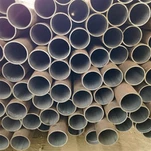
The oil casing pipe is a high-strength steel pipe designed for drilling and completing oil and gas wells. It supports the wellbore, prevents formation collapse, and isolates underground fluid zones, ensuring safe and efficient oil and gas extraction.
| Tolerance | ±1% |
| Certificate | Ce, API , JIS, ISO9001 |
| Surface | Hot-dip Galvanized |
| Alloy Or Not | Alloy Or Not, Slightly Oiled |
| Technique | Hot-dipped galvanized |
| Thickness | 2-100mm, can be customized |
| Length | 12 m(39.37ft), 6 m(19.69ft), 6.4(21.00ft), can be customized |
| Outer Diameter | 21-2000mm, can be customized |

Features
-
Fluid Isolation
Effectively separates oil, gas, and water layers to avoid cross-contamination.
-
High Pressure Resistance
Withstands downhole pressures up to 10,000 psi and temperatures up to 350°F (177°C).
-
Premium alloy steel (e.g., J55, N80, P110 grades)
It complies with international standards like API 5CT (American Petroleum Institute) and ISO 11960, ensuring reliability in high-pressure, high-temperature (HPHT) downhole environments.
- Equipment Protection
Provides a stable channel for downhole tools, reducing damage from formation debris.
Customization Options
-
Steel grade selection
(Basic) H40, J55, K55, N80, R95; (High-strength) C90, L80, M65, T95; (Anti-sulfur) P110; (Ultra-high strength) Q125, selected according to service conditions.
-
Wall thickness is tailored to pressure requirements (2-100 mm, can be customized).
-
PSL (Product Specification Level)
PSL1: Applicable to shallow wells and non-corrosive environments.
PSL2: Increased impact toughness, non-destructive testing, and traceability apply to medium and deep wells.
PSL3: Strict control of hardenability, grain size, and inclusions; used for high-pressure gas wells and corrosive conditions.
- Pipe length customization (6 m, 6.4 m, 12 m, or custom).
- Outer diameter adjustments for specific casing designs.

FAQ
Q: What are the typical applications of oil casing pipes?
A: The main application scenarios include onshore oil/gas fields, offshore oil/gas drilling, geothermal wells, and enhanced oil recovery (EOR) projects.
Q: Could you provide guidance on manufacturing methods and selecting the appropriate standards?
A: 1. For deep, high-pressure wells, use PSL2/3 grades with QT heat treatment, full non-destructive testing, and BC trapezoidal threads for better sealing and anti-sticking.
2. For corrosive environments (CO₂/H₂S), select 13Cr, 22Cr duplex, or nickel alloys and follow NACE MR0175/ISO 15156 to control hardness and microstructure.
Q: What are the main types of oil casing pipes and their application stages?
A: Oil casing pipes are divided into surface casing (0–1,000 m) to protect shallow groundwater and support subsequent casings, intermediate casing (1,000–3,000 m) to isolate high-pressure or corrosive layers, and production casing (3,000 m+) to guide oil and gas flow and withstand maximum downhole pressures.

Hot Tags: oil casing pipe, China oil casing pipe manufacturers, suppliers, factory, astm a519, 2 black steel pipe, stainless steel drain, 1 2 inch steel pipe, low carbon steel pipe, sch 40 galvanized pipe