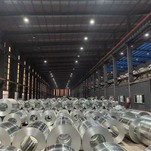
In January 2026, the 10th Stainless Steel Industry Development Conference was held in Beijing, where industry leaders, technical experts, and over 350 enterprises along the supply chain jointly discussed market trends. The conference pointed out that the stainless steel tube market is shifting from scale expansion to quality and efficiency transformation. The demand in high-end application areas (such as hydrogen storage and transportation, nuclear power, and semiconductor equipment) has surged, driving technological upgrades and supply chain reconfiguration in the industry. This article, based on the latest industry data and expert opinions, provides market insights and decision-making references for large buyers.

Market Status: Divergence in Supply and Demand, High Premium for High-End Products
Supply-side Adjustment
Capacity Concentration: Domestic stainless steel crude steel production capacity exceeded 45 million tons, but the actual operating rate remained at 75%. Leading enterprises (such as Taigang and Qingshan Group) achieved a self-sufficiency rate of raw materials over 60% through overseas layout (Indonesian nickel iron industrial park), expanding their cost advantages.
Technological Upgrade Acceleration: The seamless pipe cluster in Jiangsu Diannan region increased the finished product rate to 92% through intelligent transformation; Leading enterprises developed the "cold rolling - online solution" integrated process, reducing the production cost of thin-walled pipes by 8% and achieving a 99.6% pass rate for intergranular corrosion.
Structural Changes in Demand
Pressure on Traditional Sectors: Housing regulation led to a 12% year-on-year decline in the demand for ordinary pipes for building decoration, but the penetration rate of medical-grade antibacterial stainless steel pipes in hospital construction increased to 35%.
Emerging Sectors Boom:
Energy Industry: The demand for ultra-low temperature steel pipes for LNG receiving stations and high boron steel pipes for nuclear power increased by 18% annually;
New Energy Vehicles: The demand for precision welded pipes for battery shells led to a surge in orders for thin-walled pipes (0.5-1.2mm), and some manufacturers set up continuous rolling production lines to meet customized demands;
Hydrogen Storage and Transportation: High-pressure stainless steel pipes (above 35MPa) entered the commercial verification stage, with a projected compound annual growth rate of over 25% in the next three years.
Cost and Policy: Market Reconstruction Driven by Dual Factors

Raw Material Price Fluctuations
Nickel Price Fluctuation: Affected by the release of nickel iron production capacity in Indonesia and the diversion of demand for new energy, the nickel price dropped to the range of 13-150,000 yuan/ton, but the price of chromium iron remained firm due to the power crisis in South Africa, with the cost premium of high-end pipes such as 316L remaining at 15%-20%.
Utilization of Scrap Steel: The proportion of scrap steel used by domestic stainless steel factories exceeded 40%, alleviating dependence on nickel prices, and the popularization of short-process smelting technology may reduce the energy consumption per ton of steel to below 380kW·h.
Policy Benefits Release
Green Building Mandatory Standards: The new "Green Building Evaluation Standard" proposes to require a stainless steelization rate of not less than 50% for water supply pipe systems, promoting the growth of procurement demand in municipal and commercial real estate projects;
Export Market Reconstruction: The EU anti-dumping tax (17.2%-28.5%) forced enterprises to shift to Southeast Asian and Middle Eastern markets, with the demand for photovoltaic brackets in Vietnam increasing by 25% annually, but the trend of local production was obvious, and enterprises needed to accelerate the acquisition of international certifications such as ASTM A312 and EN 10216-5.III. Procurement Strategy Suggestions: Lock in Long-Term Agreements, Layout High-End Tracks Cost Control and Risk HedgingDynamic Price Linkage Mechanism: Sign annual agreement prices with leading manufacturers to avoid risks of short-term fluctuations in raw material prices;
Regional Supply Chain Optimization: Layout regional warehouses in East China and South China, using digital warehousing systems (such as 72-hour rapid delivery) to reduce logistics costs.
Positioning in High-End Application Fields
Hydrogen Storage and Transportation Pipe Materials: Establish cooperation with enterprises with production capacity of high-pressure pipes above 35MPa (such as Wuxi Rongcheng and Shanghai Xigeng) in advance;
Semiconductor Equipment Pipe Materials: Pay attention to breakthroughs in the application of duplex stainless steel (2205/2507) in seawater desalination equipment, and the premium capacity of such pipe materials increased by 30%;
Medical-grade Pipe Materials: Preferentially choose suppliers with ISO 13485 certification (such as Foshan Nuoci and Shenzhen Dongxindada), ensuring that the products meet antibacterial and corrosion resistance standards.

Technical Compliance and Certification
International Standard Adaptation: For export projects, require suppliers to provide certification documents such as EN 10216-5 and ASTM A789;
Environmental Requirements Upgrade: Verify whether suppliers have passed ISO 14001 environmental management system certification to avoid supply disruptions due to environmental production restrictions.
IV. Key Trend Predictions for the Next Three Years Technology-driven: The hydrogen storage and transportation, as well as nuclear power sector piping, will drive the technological iteration of ultra-low temperature and high boron stainless steel pipes;
Channel transformation: B2B e-commerce platforms are expected to cover 60% of standard pipe transactions, but non-standard customization still relies on offline technical services;Profit differentiation: The profit margins in high-end fields (such as marine engineering and semiconductor equipment) are expected to exceed 20%, while the profits of ordinary decorative pipes may be reduced to below 5%. Conclusion
In 2026, the stainless steel pipe market will exhibit the characteristics of "moderate growth in total volume (5%-8%) and significant structural differentiation". Large purchasers need to adopt the core strategy of "technology orientation + risk hedging", prioritize the layout of high-end application tracks, and at the same time, reduce cost pressure through long-term agreements and regional supply chain optimization. The industry is shifting from "price competition" to "value competition". Only those enterprises that have taken the lead in positioning at the technological peak and compliance standards can seize the initiative in the next cycle.