Product Introduction
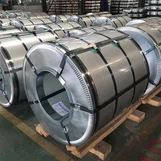
Galvanized steel is a type of metal material that is coated with a layer of zinc on the surface of an ordinary steel plate to prevent the steel from corroding and rusting. Its core advantage lies in the electrochemical protective effect of the zinc layer: even if the surface coating is scratched, the zinc will act as a sacrificial anode and oxidize first, thereby protecting the internal steel substrate from corrosion. Therefore, galvanized steel is widely used in numerous fields such as construction, household appliances, automobile manufacturing, and steel structures where corrosion resistance is required.
| Tolerance | ±1% |
| Material | SGCC, DX51D+Z, DX52D+Z, DX53D+Z, DX54D+Z, S220GD+Z, DX51D+Z, A653 |
| Standard | JIS, G3302, ASTM, A653M, EN10327, DIN17162, EN10142, EN10147, EN10292 |
| Zinc coating | 40-600g/m2, according to customer's requirement |
| Thickness | 0.1-20mm or as required |
| Width | 4.0cm-2.4m or as required |
| Lenth | 1.0-12m or as required |
| Surface | Galvanized, black and painted, transparent oil, antirust oil, can be customized. |
| Application | Pre-engineered steel buildings, industrial and commercial roofing and cladding, agricultural buildings |

Material&Chemical Composition
The material of galvanized steel is usually made of low-carbon steel, because low-carbon steel has good processing performance and cost-effectiveness.
Base Steel
Main components: Iron (Fe) as the matrix, carbon (C) content is usually ≤ 0.25%, manganese (Mn) content ≤ 1.65%.
Other elements: Silicon (Si), phosphorus (P), sulfur (S), etc. are harmful impurities, and their contents need to be strictly controlled.
Zinc Coating
Main component: Zinc (Zn), purity is usually ≥ 98.5%.
Alloying treatment: For hot-dip galvanizing (especially alloyed hot-dip galvanizing), the zinc layer will react with the base steel iron to form zinc-iron alloy layers, thereby obtaining higher hardness and wear resistance.
Coating weight: Usually expressed as the zinc layer weight per square meter (g/m²), the common range is 40g/m² to 275g/m².

Manufacturing Process
Hot-Dip Galvanization The most widely used process for our galvanized steel plates, following a 5-step precision workflow:
Pre-Treatment
Steel plates are degreased (to remove oil), pickled (with hydrochloric acid to eliminate rust), and rinsed-ensuring a clean, oxide-free surface for zinc adhesion.
Fluxing
Plates are dipped in a zinc ammonium chloride flux solution to form a protective film, preventing re-oxidation before galvanizing.
Hot-Dip Immersion
Plates are fully submerged in a molten zinc bath (temperature 440-460℃) for 3-5 minutes. The zinc reacts with iron on the steel surface to form a metallurgically bonded zinc-iron alloy layer, followed by an outer pure zinc coating. This process provides excellent corrosion resistance for the steel substrate.
zinc-iron alloy layer
(50-70μm thick) bonded to the base steel, with an outer pure zinc layer (35-50μm thick) for added protection.
Cooling & Passivation
Plates are cooled with air or water, then treated with a chromate or silane passivation solution to enhance zinc layer adhesion and resist white rust.
Advantage: The dual-layer (alloy + pure zinc) structure provides long-term corrosion resistance-with a service life of 20-30 years in outdoor/industrial environments.

Process Advantages & Quality Assurance
Customizable Zinc Thickness: For HDG, we adjust zinc layer thickness (85-275g/㎡) based on corrosion requirements (e.g., 275g/㎡ for heavy industrial areas).
International Standards Compliance: Both processes meet ASTM A123 (HDG) , with SGS/BV test reports available to verify zinc adhesion and corrosion resistance.
Consistent Quality: Our automated galvanizing lines ensure uniform coating across every plate-no uneven thickness or surface blemishes, critical for large-batch projects.
Typical Applications
Hot-Dip Galvanized Steel Plates
•Roofing
•Wall cladding
•Highway guardrails
•Agricultural greenhouses
Electro‑galvanized Steel Plates
•Home appliances
•Automobile interior & parts
•Electrical cabinets & enclosures
•Light steel structures
•Furniture & metal components
•Construction interior parts

FAQs
What's the corrosion resistance like?
It has excellent corrosion resistance, can resist rain, salt spray and industrial fumes, suitable for long‑term outdoor use.
How is it different from electro‑galvanized sheets?
Hot‑dip galvanized plates have a much thicker zinc coating, better corrosion resistance, more suitable for outdoor use; electro‑galvanized is thinner, mainly for indoor use.
What are your main applications?
Mainly used for roofing, wall cladding, highway guardrails and agricultural greenhouses.
What's the production process?
Steel plates are submerged in molten zinc at 440–460℃ for 3–5 minutes, forming a firm zinc‑iron alloy layer.
Hot Tags: 1 4 galvanized steel plate, China 1 4 galvanized steel plate manufacturers, suppliers, factory, 1 4 Galvanized Steel Plate, 3 mm carbon steel sheet, low carbon steel sheet, steel plate, 1 4 Cold Rolled Steel Plate, steel circle plate