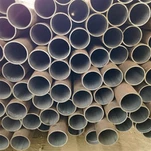
Stainless steel pipes are a metal material widely used in industrial, architectural, and residential applications. Their appearance not only directly impacts the aesthetics of the product but also reflects the quality of the manufacturing process and the performance of the material. The appearance characteristics of stainless steel pipes are primarily reflected in surface condition, color, gloss, geometric dimensions, and surface defects, which together constitute their unique visual identity.
Surface Condition
The surface condition of stainless steel pipes is one of their most intuitive visual characteristics. Common surface finishes include polishing, brushing, frosting, and mirroring. Polished stainless steel pipes have a mirror-like smooth surface with high reflectivity and are often used in high-end decorative or food-grade equipment. Brushing, through mechanical friction, creates a uniform longitudinal grain, giving the pipe a delicate matte finish that is both slip-resistant and fingerprint-resistant. Frosted surfaces exhibit a uniform grain and are suitable for applications requiring reduced glare. Mirrored stainless steel pipes, with their extremely high gloss and near-mirror-like reflectivity, are often used in decorative structures or precision instrument housings.
Color and Gloss
Stainless steel pipes typically have a silvery-white base color, a characteristic of the natural oxide layer derived from their chromium-nickel alloy composition. However, through different surface treatment processes, its color can vary greatly. For example, stainless steel pipes treated with electrolytic coloring or PVD (physical vapor deposition) technology can achieve special colors such as black, gold, and rose gold to meet personalized design needs. Regarding gloss, high-gloss surfaces produce strong reflections, while low-gloss or matte surfaces create a softer visual effect. Controlling gloss depends on the precision of the polishing or brushing process.
Geometric Dimensions and Shape
The geometric appearance characteristics of stainless steel pipe include its outer diameter, wall thickness, straightness, and end treatment. Standard stainless steel pipes typically have precise outer diameter and wall thickness tolerances to ensure assembly accuracy. The difference between straight seam welded pipe and seamless steel pipe is also reflected in its appearance: seamless steel pipe has no weld marks, showing a stronger overall appearance; while straight seam welded pipe may have a fine weld line on the outside, but high-quality welded pipe can be polished to virtually eliminate the visual difference. Furthermore, the flush cut, chamfer, or thread treatment of the pipe ends can also affect its installation fit and aesthetics. Surface Defects and Quality Control
High-quality stainless steel pipe should be free of obvious surface defects such as scratches, pits, oxidation stains, uneven welds, or burrs. These defects may arise from poor raw material quality, improper processing, or damage during transportation or storage. Industrial-grade stainless steel pipes are permitted to have minor surface irregularities, but decorative-grade or high-precision pipes require stricter control over defect levels. Visual inspection or specialized instrument testing can ensure that the appearance of stainless steel pipes meets industry standards or custom requirements.
Conclusion
The appearance of stainless steel pipes is a crucial indicator of their overall quality. From surface treatment to geometric accuracy, these characteristics directly impact their application scenarios and market acceptance. Whether pursuing functionality or aesthetic value, the appearance of stainless steel pipes must be ensured through rigorous manufacturing and inspection processes to meet the diverse needs of different industries.