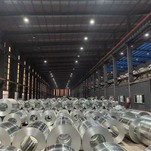
As an important industrial and civilian material, stainless steel pipes play a key role in numerous fields thanks to their excellent corrosion resistance, mechanical strength, and processability. Their functional foundation primarily stems from the material's chemical composition, microstructure, and surface treatment, which together determine the application scope and performance of stainless steel pipes.
Corrosion Resistance: The Core Function of Stainless Steel Pipes
Stainless steel pipe's corrosion resistance is its most significant functional characteristic, primarily due to the addition of chromium (Cr). When the chromium content reaches 10.5% or above, a dense passive film of chromium oxide (Cr₂O₃) forms on the steel surface. This film effectively blocks the intrusion of oxygen and moisture, thereby preventing further oxidation of the base metal. Different types of stainless steel pipes (such as 304 and 316) can be adapted to more severe corrosive environments by adjusting the ratios of alloying elements such as nickel (Ni) and molybdenum (Mo). For example, 316 stainless steel, with its 2% to 3% molybdenum content, exhibits enhanced pitting corrosion resistance in marine environments or high-chloride media.
Mechanical Properties and Structural Stability
Stainless steel pipes are not only corrosion-resistant but also possess high mechanical strength and good ductility. Their tensile strength typically ranges from 500 to 800 MPa, and their yield strength ranges from 200 to 500 MPa, enabling them to withstand significant pressure and impact loads. Their mechanical properties can be further optimized through cold working (such as cold rolling and cold drawing) or heat treatment (such as solution treatment). For example, cold-worked stainless steel pipes achieve increased hardness, making them suitable for high-precision fluid transport piping. Annealed stainless steel pipes, on the other hand, offer improved weldability and formability, making them widely used in architectural decoration and structural support.
Surface Properties and Expanded Functionality
Stainless steel pipes offer a high surface finish and low roughness, offering significant advantages in fluid transport applications. Their smooth interior reduces fluid resistance, lowers energy consumption, and inhibits bacterial growth (meeting food-grade or pharmaceutical-grade standards). Furthermore, stainless steel pipes can be treated with various surface finishes through polishing, sandblasting, or electrolytic treatment to meet architectural aesthetics or industrial corrosion protection requirements. For example, mirror-polished stainless steel pipes are often used in high-end decoration, while matte or textured finishes enhance their anti-slip or wear resistance.
Functional Adaptability in Application Areas
Based on these functional foundations, stainless steel pipes are widely used in the following areas:
1.Fluid transport (such as water, oil, and gas): relying on their corrosion resistance and smooth interior surface;
2.Chemical and environmental protection equipment: resisting corrosion from acidic and alkaline media to ensure long-term stable operation;
3.Architecture and decoration: balancing structural strength and aesthetics;
4.Medical devices and the food industry: meeting hygienic requirements, being easy to clean, and non-toxic.
Conclusion
Stainless steel pipe's functional foundation is the core support for its diverse applications. Through materials science-based design and process optimization, its performance can be further customized to meet specific needs. In the future, with the development of new stainless steel alloys (such as duplex steel and super stainless steel), its functional boundaries will continue to expand, playing an irreplaceable role in higher-end industrial systems.