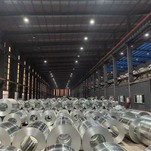
Stainless steel pipe, as a key industrial material, plays an irreplaceable role in numerous fields of modern society. Its excellent corrosion resistance, high strength, and long service life make it the material of choice in industries such as construction, manufacturing, healthcare, and food processing. This article will explore the key uses of stainless steel pipe and its application value in various fields.
1. Applications in Architecture and Structural Engineering
In the construction industry, stainless steel pipe, due to its excellent weather resistance and aesthetics, is widely used in curtain walls, handrails, decorative structures, and support systems. Stainless steel pipe resists erosion from wind and rain, maintaining a smooth surface over time and reducing maintenance costs. Furthermore, its high strength makes it suitable for load-bearing structures in high-rise buildings, ensuring their safety and stability.
2. Industrial Manufacturing and Mechanical Engineering
In industrial manufacturing, stainless steel pipe is often used to transport corrosive fluids, gases, or high-temperature media. For example, in the petrochemical, power generation, and shipbuilding industries, stainless steel pipe is a core material for piping systems due to its resistance to high temperatures, high pressures, and chemical corrosion. Stainless steel pipes are also used in the manufacture of mechanical components such as bearings, hydraulic cylinders, and heat exchangers. Their durability and precision extend the lifespan and operational efficiency of equipment.
III. Medical and Health Care
The application of stainless steel pipes in the medical industry is primarily reflected in medical devices and sanitary facilities. Due to their excellent antimicrobial properties and ease of cleaning, stainless steel pipes are widely used in surgical instruments, infusion tubing, and sterilization equipment. Furthermore, in the dental and orthopedic fields, stainless steel pipes are often used in the manufacture of implants and stents due to their biocompatibility and strength, ensuring patient safety and well-being.
IV. Food and Beverage Processing
In food processing and beverage production, stainless steel pipes are ideal for conveying liquids, gases, and food ingredients due to their non-toxic, corrosion-resistant, and easy-to-clean properties. Stainless steel pipes meet food safety standards and do not contaminate products. They can also withstand high-temperature sterilization, ensuring a hygienic and safe production process.
V. Environmental Protection and Energy
Stainless steel pipes also play a vital role in the environmental protection and energy industries. For example, in sewage treatment systems, stainless steel pipes can resist corrosive substances in wastewater, ensuring the long-term and stable operation of the piping system. In clean energy sectors like solar and nuclear power, stainless steel pipes, due to their high-temperature and radiation-resistant properties, are used in the manufacture of key components, improving energy efficiency.
Conclusion
Stainless steel pipes, with their corrosion resistance, high strength, and hygienic and safe properties, play a vital role in a wide range of fields, including construction, industry, healthcare, food, and energy. With technological advancements and growing demand, the application of stainless steel pipes will further expand, providing reliable material support for the sustainable development of various industries. In the future, stainless steel pipes will remain an indispensable foundational material in modern industry and life.